
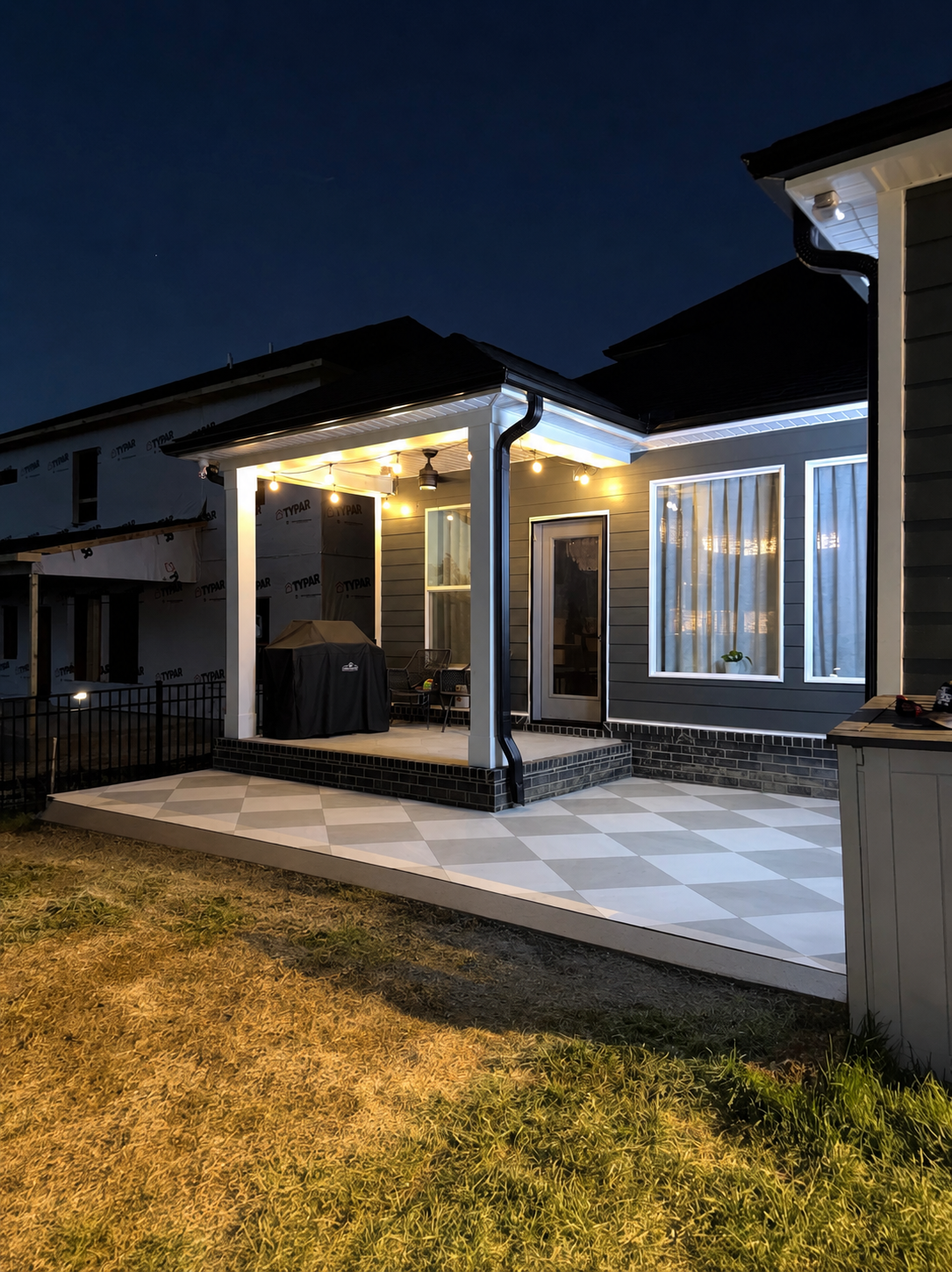
Outdoor Spaces Built for Daily Use
Paver Patios in Lebanon for properties needing durable outdoor living areas that handle Tennessee weather cycles
Greenhand Landscaping installs paver patios across Lebanon, Gallatin, and Mt. Juliet, addressing the need for outdoor spaces that withstand seasonal freezing, summer heat expansion, and the clay-heavy soils common throughout this region. The service suits homeowners looking to replace cracked concrete slabs, create defined entertainment areas, or add functional outdoor space that won't require repeated repairs. Properly installed paver systems flex with ground movement rather than fracturing like poured surfaces.
The installation process involves excavating to proper depth, establishing a compacted gravel base that allows drainage, and setting individual pavers in a sand bed that permits minor adjustments over time. Clay soils in this area retain moisture and shift with seasonal temperature changes, making base preparation the most critical phase of any paver project.
Schedule a site assessment to evaluate your property's grading and determine the base requirements for your outdoor space.
What Proper Paver Installation Requires
A quality paver patio begins with excavation that reaches undisturbed soil, typically six to eight inches below the finished surface elevation. The base layer uses crushed stone compacted in lifts, creating a stable platform that sheds water away from the patio surface. Edge restraints anchor the perimeter, preventing pavers from shifting outward under foot traffic and furniture weight.
Once the installation is complete, you'll notice that the surface remains level without settling into low spots, rainwater drains off rather than pooling in depressions, and individual pavers don't rock underfoot. The joints between pavers stay filled with polymeric sand that resists washout and weed growth, maintaining a finished appearance season after season.
The choice of paver thickness affects both longevity and application, with standard patios using pavers rated for pedestrian use while areas supporting vehicles or heavy planters require thicker units. Color selection matters less for durability than texture, which determines how slippery the surface becomes when wet or frosted.
Questions Before Starting Your Patio Project
Paver patios generate questions about material options, site preparation, and how installations perform across Tennessee's shifting seasons.
What makes paver patios better suited to Tennessee clay soils than poured concrete?
Pavers sit on a flexible sand bed above a drainage base, allowing individual units to shift slightly with soil movement without cracking. Concrete slabs crack when clay soils expand during wet periods or contract in drought because the rigid surface cannot flex with the ground beneath it.
How does base preparation affect long-term patio performance?
Proper excavation removes organic material and unstable soil, while the compacted gravel base provides both structural support and a drainage pathway. Inadequate base depth or poor compaction leads to settling, creating low spots where water collects and accelerates deterioration.
When is the best time to install a paver patio in the Lebanon area?
Fall and spring offer ideal conditions because soil moisture levels remain stable and temperatures allow proper base compaction. Summer heat can dry out sand bedding too quickly, while winter ground freezing complicates excavation and compaction efforts.
What thickness of paver is necessary for typical patio use?
Standard patios handling furniture and foot traffic require pavers at least two inches thick, while areas supporting fire pits, outdoor kitchens, or occasional vehicle access need three-inch units that distribute weight across a larger footprint.
How do polymeric sand joints prevent weed growth and sand washout?
Polymeric sand contains binding agents that activate when water is applied during installation, creating a semi-rigid joint that resists erosion from rain while blocking sunlight and seeds from reaching the soil below, preventing most weed establishment between pavers.
Greenhand Landscaping evaluates your property's drainage patterns, soil conditions, and intended patio use to determine the appropriate base depth and paver specifications. Request a project consultation to review material options and site-specific installation requirements for your outdoor space.